
First Round Recap: Every Team Has Played Once, and the 2026 World Cup Is Already Wide Open
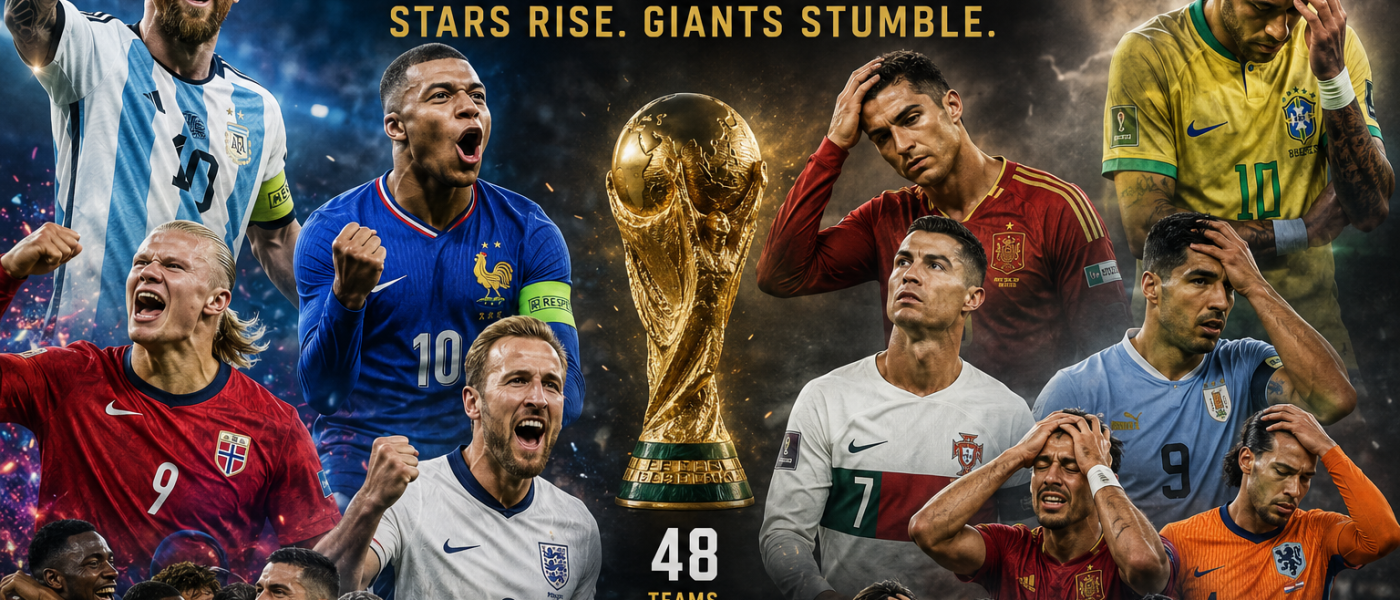
Every team has now played once at the 2026 World Cup, and the tournament has already delivered a clear message: this expanded 48-team format is not slower, softer or predictable. It is chaotic, physical, tactical and wide open.
After four and a half years of waiting, the ball is rolling across North America. From the opening match at the Estadio Azteca on June 11 to the final game of the first full round of group-stage matches, the tournament has already given us superstar performances, tactical surprises, heavy favorites under pressure and underdogs refusing to behave like guests.
This is not a recap of one matchday. This is the first real snapshot of the entire tournament: all 48 teams have played once, every group has taken shape, and the second round of matches now begins with pressure everywhere.
The new 48-team format came with questions. Would the quality drop? Would too many games feel uneven? Would the traditional powers cruise through the opening round?
The first answer is clear: absolutely not.
The expanded World Cup has not diluted the tournament. It has made it more volatile. Smaller nations arrived with structure, intensity and belief. The favorites discovered very quickly that reputation means nothing once the match starts.
Here is the full first round breakdown: the stars who showed up, the giants who stumbled, the hosts who lived different realities, and the tactical lessons that already define this World Cup.
The Stars Arrived Early
Every World Cup needs its stars. This one did not have to wait long.
The first full round was not only about teams taking early control. It was about the biggest names in the game stepping into the spotlight immediately and reminding the tournament that individual greatness still changes everything.
Messi Starts With a Hat-Trick
Argentina opened Group J with a clean 3-0 win over Algeria, but the story was Lionel Messi.
In his sixth World Cup, Messi delivered a hat-trick that felt less like a normal opening performance and more like a statement of intent. Algeria tried to make the match uncomfortable. It wanted contact, compact defending and disruption. Argentina stayed patient, controlled the rhythm and let its greatest player finish the job.
The defending champion looked composed, sharp and emotionally settled. Argentina did not need chaos. It had control. And when it needed the final touch, Messi supplied all three goals.
That matters. In a short group stage, a 3-0 opening win gives points, goal difference and breathing room. But a Messi hat-trick gives something more: belief that Argentina’s biggest weapon is still fully alive.
Mbappé Leads France Through a Physical Test
France’s 3-1 win over Senegal was one of the most demanding matches of the first round.
Senegal did not come to survive. It pressed, ran, challenged and forced France into uncomfortable stretches. But elite teams survive those moments because they have elite players, and Kylian Mbappé gave France the edge.
His two goals turned a difficult opener into a controlled result. France did not play a perfect match, but it did what contenders do: absorb pressure, accelerate in key moments and punish mistakes.
Mbappé’s performance reinforced France’s status as one of the tournament’s deepest and most dangerous sides. It also continued the early theme of this World Cup: the biggest players are not waiting to make an impact.
Haaland Makes His World Cup Entrance
There was a special kind of anticipation around Norway’s first match. The reason was obvious: Erling Haaland was finally on a World Cup stage.
Norway’s 4-1 win over Iraq was one of the loudest results of the first round, and Haaland scored twice to make sure the world noticed.
Norway played with width, speed and a clear attacking plan. It stretched Iraq, attacked the box aggressively and used Haaland as the kind of reference point that changes how defenders behave. Iraq had moments, but once Norway found rhythm, the match opened too much.
Now Norway leads Group I on goal difference, ahead of France. That alone makes the group far more interesting.
Kane Keeps the Momentum Going for England
England joined the star-driven storyline with a 4-2 win over Croatia in Group L.
Harry Kane scored twice and gave England the kind of opening performance every contender wants from its main striker. The win was not perfect. England conceded twice and still has defensive details to correct. But going forward, it looked dangerous.
After Messi, Mbappé and Haaland had already delivered, Kane added another layer to the same story: the elite finishers are arriving early, and they are shaping the first phase of the tournament.
Germany Sends the Loudest Team Warning
Germany delivered the biggest win of the first round, crushing Curaçao 7-1 in Group E.
That result was exactly what a favorite wants from a first match: total control, goals from multiple areas, confidence and a massive boost to goal difference. Curaçao had its moment, but Germany punished every defensive gap with the cold precision of a team that understood the value of starting fast.
Germany did not just win. It made sure the rest of the group immediately understood the size of the task ahead.
The Hosts: Three Teams, Three Very Different Starts
Hosting a World Cup can lift a team. It can also suffocate it.
Mexico, the United States and Canada all opened at home, but their first matches told three very different stories.
Mexico Feeds Off the Azteca
Mexico’s 2-0 win over South Africa gave the tournament the opening night it needed.
The Estadio Azteca felt alive, and Mexico used that energy well. The team pressed high, played with aggression and forced South Africa into uncomfortable decisions. South Africa’s two red cards reflected the pressure of the match as much as individual mistakes.
Mexico did not just win. It managed the opening match with authority. Julián Quiñones was decisive, Raúl Jiménez added finishing power, and Javier Aguirre’s plan worked because Mexico understood the emotional weight of the night without being consumed by it.
The United States Makes the Strongest Host Statement
The United States delivered the most impressive performance among the three hosts, beating Paraguay 4-1.
That result should not be dismissed as a simple opening win. Paraguay is usually difficult, physical and uncomfortable. The USMNT made it look overwhelmed.
The Americans played with pace, intensity and directness. Their transitions were fast, their pressing was aggressive and their finishing was ruthless. Of the three host nations, the United States looked the most fluid and physically prepared after the first round.
It was not just a win. It was a warning.
Canada Feels the Weight of the Moment
Canada’s 1-1 draw with Bosnia and Herzegovina told a different story.
In Toronto, the pressure looked heavy. Canada had energy, but not enough clarity. Bosnia defended with discipline, took the lead and forced Canada into a match driven more by emotion than structure.
Cyle Larin’s late equalizer saved the point, but Canada will know it needs to improve quickly. A draw is not fatal, especially in a 48-team World Cup, but the performance left questions.
Canada has talent. Now it needs control.
The Underdog Revolt: Why the Giants Stumbled
The biggest story of the first round was not only the stars. It was the resistance.
Several favorites expected to begin with wins. Instead, they ran into organized, disciplined and fearless opponents who understood exactly how to turn a group-stage opener into a trap.
Spain 0-0 Cape Verde: The Tactical Wall
Spain’s goalless draw against Cape Verde was the shock result of the first round.
Spain had the ball. It had the territory. It had long stretches of control. But Cape Verde had the plan.
The World Cup debutant defended in a compact shape, closed the central lanes and forced Spain into wide circulation with little vertical damage. Spain’s possession became predictable. The ball moved, but not fast enough. The pressure increased, but not with enough variety.
For Cape Verde, this was historic. A first World Cup match, a clean sheet and a point against a title contender.
For Spain, it was a warning. Control without penetration is not dominance. It is sterile possession.
Brazil 1-1 Morocco: Modern Structure Meets Tradition
Brazil’s 1-1 draw with Morocco was another reminder that Morocco’s 2022 run was not a one-off.
Morocco looked organized, fast and tactically mature. It defended with strong coverage, pressed at the right times and attacked space with speed after turnovers. Brazil had moments of quality, but too often looked disconnected between midfield and attack.
The biggest issue for Brazil was transition defense. When Brazil lost the ball, Morocco found ways to move forward quickly and expose gaps.
This was not a disaster for Brazil, but it did show that the team cannot rely on history or talent alone. Morocco made the match modern, physical and uncomfortable.
Portugal 1-1 DR Congo: A Favorite Without Fluency
Portugal’s 1-1 draw with DR Congo felt like a missed opportunity.
Portugal entered with more quality, more attacking names and higher expectations. But it never found full rhythm. The ball reached good zones, but the final actions were slow or imprecise.
Cristiano Ronaldo had very few clear chances, and the ones he did get were not taken. That made Portugal’s attacking frustration even more visible.
DR Congo deserves credit. It stayed compact, competed physically and made Portugal uncomfortable. But for Portugal, the draw leaves pressure. One frustrating result is survivable. A second one could change the entire group.
Uruguay 1-1 Saudi Arabia: A Missed Opening
Uruguay also dropped points, drawing 1-1 with Saudi Arabia.
Saudi Arabia made the match physical and difficult, refusing to let Uruguay settle into a comfortable rhythm. Uruguay found a response, but not full control.
In a group where Spain also drew, this was a missed chance. Uruguay could have taken immediate command of Group H. Instead, all four teams left the first round with one point.
Netherlands 2-2 Japan: Another Warning for a Favorite
The Netherlands also learned that control is not always enough.
The 2-2 draw with Japan was one of the most entertaining matches of the first round, but it left the Dutch with mixed feelings. The Netherlands showed quality going forward, yet Japan’s speed, discipline and timing in transition kept the match alive.
Japan did not play like a team waiting for permission. It competed, attacked space and earned a result that gives Group F a very different shape.
Why the Gap Is Closing
There is a clear tactical lesson from the first round: the distance between favorites and underdogs is smaller than ever.
Not because the best teams have less talent. They do not.
The gap is closing because the so-called smaller nations are better prepared. Their defensive structures are sharper. Their physical levels are higher. Their coaching staffs understand how to build game plans that reduce space, delay decisions and turn possession into frustration.
If a favorite plays slowly, it becomes ordinary. If a favorite lacks width, tempo changes or individual dribbling, the underdog’s shape can survive. If a star does not appear, the match can become a trap.
That is the new reality of this World Cup.
CONMEBOL: Mixed Signals, Strong Responses
The first round left South America with a mixed but fascinating picture.
Argentina looked like a champion and won 3-0. Colombia took control of Group K with a strong 3-1 win over Uzbekistan. But Brazil and Uruguay both dropped points in matches they were expected to win.
That contrast matters. CONMEBOL still has elite talent and competitive edge, but the first round showed that no South American side can rely only on reputation.
Argentina and Colombia created momentum. Brazil and Uruguay now need sharper second performances.
Europe: Power, Pressure and a Few Cracks
Europe produced some of the first round’s biggest statements.
Germany scored seven. England scored four. France won a difficult opener. Sweden crushed Tunisia 5-1. Austria beat Jordan 3-1. Scotland took three points against Haiti.
But the round was not perfect for UEFA sides. Spain dropped points against Cape Verde. Portugal drew with DR Congo. Belgium drew with Egypt. The Netherlands drew with Japan. Croatia conceded four against England.
The lesson is clear: Europe still brings depth, but the favorites are not all moving at the same speed.
Africa and Asia Show Real Competitive Weight
African and Asian teams gave the first round much of its unpredictability.
Cape Verde’s draw with Spain was the headline result. Morocco frustrated Brazil. DR Congo held Portugal. Senegal tested France. Japan drew with the Netherlands. Saudi Arabia held Uruguay. Iran and New Zealand played one of the most open matches of the round.
These were not lucky moments in isolation. They were the product of better organization, better preparation and higher belief.
The 48-team World Cup gives more nations a stage. The first round showed that many of them are ready to use it.
First Round Results: Every Group After One Game
Here is the complete list of results from the first full round of the 2026 World Cup group stage.
Group A
- Mexico 2-0 South Africa
- South Korea 2-1 Czechia
Group B
- Canada 1-1 Bosnia and Herzegovina
- Qatar 1-1 Switzerland
Group C
- Brazil 1-1 Morocco
- Haiti 0-1 Scotland
Group D
- United States 4-1 Paraguay
- Australia 2-0 Turkey
Group E
- Germany 7-1 Curaçao
- Ivory Coast 1-0 Ecuador
Group F
- Netherlands 2-2 Japan
- Sweden 5-1 Tunisia
Group G
- Belgium 1-1 Egypt
- Iran 2-2 New Zealand
Group H
- Spain 0-0 Cape Verde
- Saudi Arabia 1-1 Uruguay
Group I
- France 3-1 Senegal
- Iraq 1-4 Norway
Group J
- Argentina 3-0 Algeria
- Austria 3-1 Jordan
Group K
- Colombia 3-1 Uzbekistan
- Portugal 1-1 DR Congo
Group L
- England 4-2 Croatia
- Ghana 1-0 Panama
What the Second Round of Group Games Will Change
The second round of group matches begins on June 18, and this is where the tournament starts to tighten.
Opening games create stories. Second games create consequences.
The Wounded Giants Have No Comfort Left
Spain, Brazil, Portugal and Uruguay all failed to win their first matches.
That does not mean they are in crisis, but it does mean their margin is smaller than expected. Another draw would turn pressure into anxiety. A defeat could leave a major football nation depending on complicated math before the final group match.
With the top two teams in each group advancing to the Round of 32, along with the eight best third-place teams, the expanded format offers a safety net. But relying on that safety net is dangerous for any contender.
Expect those teams to play with far more urgency in their second matches. The question is whether urgency becomes energy or panic.
Rotation Becomes a Real Strategic Problem
This World Cup is not only bigger. It is geographically demanding.
Teams will deal with long travel, different climates, altitude, heat and short recovery windows. Playing in Mexico City is not the same as playing in Houston, Boston, Los Angeles or Toronto. The conditions will matter.
That creates a dilemma for coaches who won their opening match. Do they push their starters again to secure qualification early? Or do they rotate now to protect legs in a tournament that will be extremely long for the teams that go deep?
Argentina, France, Germany, England and the United States all started well. Now their coaching staffs must balance momentum against physical cost.
The Underdogs Will Defend Their Points Like Gold
Cape Verde, Morocco, DR Congo, Saudi Arabia and Japan now have something precious: a point against a favorite.
That changes their tournament.
With three or four points potentially enough to move toward qualification, these teams can approach the second match with belief and structure. Do not expect them to suddenly open up. Expect even more discipline, more compact defending and more emotional intensity.
For the favorites, breaking those blocks will be the true test.
The Big Question After Everyone Has Played Once
The first full round of games did not give us certainty. It gave us tension.
Are Argentina, France, Germany, England and the United States already separating themselves from the pack? Maybe. But the early signs also show that no favorite can coast.
Can Spain and Brazil turn control into danger? Can Portugal find rhythm before pressure becomes a problem? Can Uruguay recover after missing a chance to lead Group H? Can Cape Verde, Morocco, DR Congo and Japan turn one great result into a real qualification push?
Those are the questions that now define the tournament.
Final Takeaway: This World Cup Has Already Changed Shape
The first round of the 2026 World Cup gave us a tournament that already feels alive.
The stars showed up. Messi, Mbappé, Haaland and Kane all delivered. Germany and the United States made loud statements. Mexico fed off the Azteca. Argentina started like a champion. France handled a dangerous test.
But the underdogs also forced the world to pay attention. Cape Verde held Spain. Morocco frustrated Brazil. DR Congo denied Portugal. Saudi Arabia slowed Uruguay. Japan pushed the Netherlands. Scotland took control of Group C.
This is the promise of the 48-team World Cup at its best: more stories, more pressure, more tactical variety and more teams capable of changing the script.
The first round did not answer everything. It made the tournament bigger.
Now the second round begins, and the real tension starts: which favorites will recover, which underdogs will hold their ground, and which groups are about to explode?
Road to the World Cup continues here. Every team has played once, and the warning has already been sent: nobody gets a free win anymore.